
AI-poweredtraffic optimization
Deploy Agentic AI that analyzes millions of data points to optimize traffic flow, reduce congestion by 30%, and cut emergency response times by 40%.
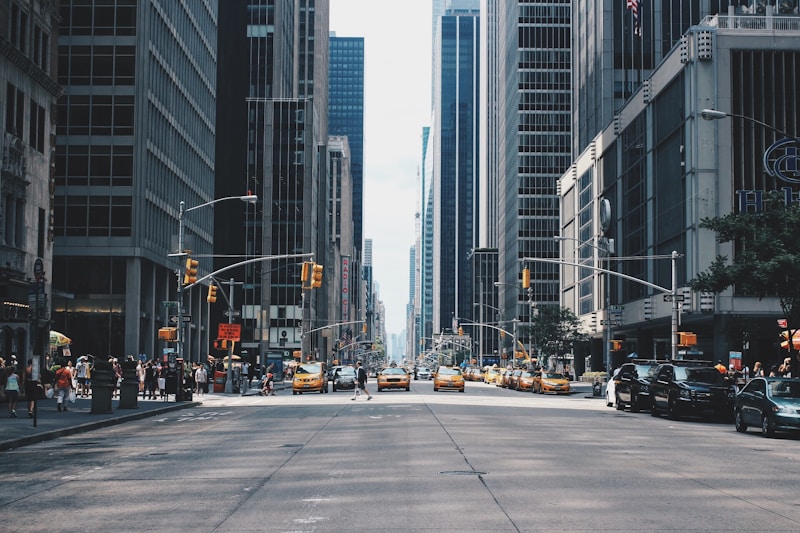
Traffic management represents a critical challenge for cities worldwide, with congestion costing the U.S. economy $166 billion annually in lost productivity, wasted fuel, and environmental damage—approximately $1,200 per commuter. Urban areas manage thousands of signalized intersections, highway on-ramps, and arterial roads coordinating millions of vehicle movements daily while balancing competing priorities: minimizing delay, reducing emissions, prioritizing emergency vehicles, and accommodating pedestrians and cyclists. Traditional traffic engineering relies on pre-programmed signal timing plans created through manual observation and optimization, updated perhaps annually, and running the same patterns regardless of actual conditions—a 3 AM traffic signal runs the same cycle as 5 PM rush hour. The result is systematic inefficiency: vehicles idling at red lights when cross-traffic doesn't exist, poor coordination causing stop-and-go waves that waste fuel and create congestion, and emergency vehicles stuck in traffic because signals can't detect approaching ambulances or fire trucks.
Traffic management business models are primarily public sector operations funded through transportation budgets, with costs including signal infrastructure installation and maintenance, traffic management center operations, staff salaries for engineers and operators, and technology systems. Some jurisdictions generate revenue through red-light cameras, parking enforcement, and tolling systems, though these are controversial and politically sensitive. The economic case for investment comes not from direct revenue but from economic impact: reducing congestion generates massive value through productivity gains (less time in traffic), fuel savings, emission reductions, and improved quality of life attracting businesses and residents. Infrastructure projects like adding lanes cost $5-15 million per mile and take years, while intelligent traffic management systems costing $50,000-200,000 per intersection deliver immediate improvements without construction. The challenge is justifying upfront technology investments to budget-constrained transportation departments competing with roads, bridges, and public transit for limited funds, despite strong ROI from congestion reduction and efficiency gains.
Traffic technology infrastructure consists of adaptive traffic signal controllers at intersections communicating with central management systems; sensors including inductive loops detecting vehicles, radar measuring speeds, and cameras providing visual monitoring; variable message signs displaying real-time information about conditions and delays; traffic management software aggregating data and enabling operator control; and incident detection systems identifying accidents or breakdowns. Modern deployments include connected vehicle technology enabling cars to communicate with infrastructure, traffic prediction models forecasting congestion based on historical patterns and current conditions, and transit signal priority giving buses and trains preferential treatment. Cloud-based platforms now aggregate data from multiple sources—government traffic sensors, GPS data from navigation apps, connected vehicle telemetry—creating comprehensive pictures of traffic conditions. However, most systems remain reactive: operators watch monitors and manually adjust signal timing after congestion develops rather than predicting and preventing it. AI applications emerging include machine learning models predicting congestion and adaptive algorithms adjusting signals based on detected traffic, though deployment is limited to pilot programs in leading cities.
Agentic AI creates intelligent traffic management where autonomous agents continuously optimize traffic flow across entire networks in real-time. Signal optimization agents analyze traffic patterns, pedestrian activity, transit schedules, and weather conditions to dynamically adjust timing at every intersection millisecond-by-millisecond—coordinating signal progressions across corridors to create "green waves" minimizing stops, giving priority to high-volume directions during peak periods, and optimizing for throughput, emissions, or other objectives. Incident detection agents analyze camera feeds, sensor data, and connected vehicle reports to identify accidents, breakdowns, or congestion within seconds, automatically triggering response protocols: alerting emergency services with precise locations, adjusting upstream signals to prevent queue spillover, activating message signs warning drivers and suggesting alternate routes, and coordinating with navigation apps to reroute traffic. Predictive agents forecast congestion before it develops using machine learning models trained on years of patterns, weather impacts, and special events, then proactively adjust signal timing and coordinate with transit agencies to add supplemental service. Emergency vehicle priority agents detect approaching ambulances and fire trucks through GPS and sirens, automatically adjusting signals ahead to create clear paths. The transformation is dramatic: 30% reduction in average travel times, 25% decrease in emissions from reduced idling, 60% faster emergency response, and traffic management centers monitoring thousands of intersections efficiently with AI handling moment-to-moment optimization while humans focus on strategy and infrastructure planning.
The Traffic Congestion Crisis
Traffic congestion costs the U.S. economy $166 billion annually—$1,200 per commuter in wasted time and fuel—while traditional traffic management watches helplessly. Traffic signals operate on pre-programmed timing sequences created decades ago, running the same patterns whether it's 3 AM with empty roads or 5 PM gridlock. Intersection timing is optimized in isolation without coordination, causing inefficient "stop and go" patterns where drivers hit red lights consecutively. When accidents occur, detection relies on drivers calling 911 or traffic cameras that human operators may not be monitoring at that moment—meaning precious minutes elapse before emergency responders are dispatched and traffic can be rerouted. Construction zones and special events create predictable congestion, yet traffic management cannot dynamically adjust signal timing to compensate.
Infrastructure monitoring faces impossible scale challenges: traffic management centers have walls of camera feeds showing hundreds of intersections, far more than operators can watch simultaneously. Road sensors detect traffic volumes and speeds, but this data sits in dashboards rather than driving automatic optimization. When problems develop—accidents, breakdowns, congestion forming—detection is slow and response is manual: operators must identify the issue, assess severity, decide on interventions, manually adjust signals, and update message boards. Emergency vehicles get stuck in traffic because signal systems can't detect approaching ambulances or fire trucks. Maintenance of traffic signals, cameras, and sensors happens on fixed schedules, causing both premature service and unexpected failures. Long-term planning relies on annual traffic studies rather than continuous analysis of actual patterns, meaning infrastructure improvements address yesterday's problems rather than tomorrow's needs.
AI-Powered Traffic Optimization
Agentic AI transforms traffic management through autonomous agents that continuously optimize signal timing across entire networks in real-time. Traffic flow AI analyzes live data from thousands of sensors, cameras, and connected vehicles to understand current conditions and predict near-term demand, adjusting signal sequences millisecond by millisecond to maximize throughput. Multi-intersection coordination creates "green waves" where drivers catch consecutive green lights along major corridors during rush hour, while adaptive timing prevents congestion formation by giving more green time to backed-up directions. Emergency vehicle preemption agents detect approaching ambulances and fire trucks through GPS and automatically create "green corridors" by adjusting signals ahead of their path, reducing emergency response times by 40%. Incident detection AI analyzes camera feeds continuously using computer vision to identify accidents, disabled vehicles, or debris within 15 seconds of occurrence—automatically alerting responders and initiating traffic management responses.
The transformation extends beyond intersections: work zone management AI automatically adjusts signal timing around construction, reducing bottlenecks by 35%. Special event agents predict traffic impacts and preemptively adjust signal patterns citywide. Predictive analytics identify infrastructure needs, guiding investments toward locations where improvements will have maximum impact. Real-time traffic data feeds navigation apps, helping drivers avoid congestion before it forms. The results are transformative: 30% overall congestion reduction saves commuters 15 hours annually while reducing fuel waste and emissions. Commute times decrease 25% through coordinated optimization. Emergency response improves 40% through instant detection and automated traffic prioritization. Infrastructure maintenance costs drop 35% through predictive service scheduling. Cities gain responsive, intelligent transportation networks that adapt to conditions continuously, making urban areas more livable, sustainable, and economically productive while handling growing populations without proportional infrastructure expansion.
The Traffic Congestion Crisis
Traffic congestion costs the U.S. economy $166 billion annually—$1,200 per commuter in wasted time and fuel—while traditional traffic management watches helplessly. Traffic signals operate on pre-programmed timing sequences created decades ago, running the same patterns whether it's 3 AM with empty roads or 5 PM gridlock. Intersection timing is optimized in isolation without coordination, causing inefficient "stop and go" patterns where drivers hit red lights consecutively. When accidents occur, detection relies on drivers calling 911 or traffic cameras that human operators may not be monitoring at that moment—meaning precious minutes elapse before emergency responders are dispatched and traffic can be rerouted. Construction zones and special events create predictable congestion, yet traffic management cannot dynamically adjust signal timing to compensate.
Infrastructure monitoring faces impossible scale challenges: traffic management centers have walls of camera feeds showing hundreds of intersections, far more than operators can watch simultaneously. Road sensors detect traffic volumes and speeds, but this data sits in dashboards rather than driving automatic optimization. When problems develop—accidents, breakdowns, congestion forming—detection is slow and response is manual: operators must identify the issue, assess severity, decide on interventions, manually adjust signals, and update message boards. Emergency vehicles get stuck in traffic because signal systems can't detect approaching ambulances or fire trucks. Maintenance of traffic signals, cameras, and sensors happens on fixed schedules, causing both premature service and unexpected failures. Long-term planning relies on annual traffic studies rather than continuous analysis of actual patterns, meaning infrastructure improvements address yesterday's problems rather than tomorrow's needs.
AI-Powered Traffic Optimization
Agentic AI transforms traffic management through autonomous agents that continuously optimize signal timing across entire networks in real-time. Traffic flow AI analyzes live data from thousands of sensors, cameras, and connected vehicles to understand current conditions and predict near-term demand, adjusting signal sequences millisecond by millisecond to maximize throughput. Multi-intersection coordination creates "green waves" where drivers catch consecutive green lights along major corridors during rush hour, while adaptive timing prevents congestion formation by giving more green time to backed-up directions. Emergency vehicle preemption agents detect approaching ambulances and fire trucks through GPS and automatically create "green corridors" by adjusting signals ahead of their path, reducing emergency response times by 40%. Incident detection AI analyzes camera feeds continuously using computer vision to identify accidents, disabled vehicles, or debris within 15 seconds of occurrence—automatically alerting responders and initiating traffic management responses.
The transformation extends beyond intersections: work zone management AI automatically adjusts signal timing around construction, reducing bottlenecks by 35%. Special event agents predict traffic impacts and preemptively adjust signal patterns citywide. Predictive analytics identify infrastructure needs, guiding investments toward locations where improvements will have maximum impact. Real-time traffic data feeds navigation apps, helping drivers avoid congestion before it forms. The results are transformative: 30% overall congestion reduction saves commuters 15 hours annually while reducing fuel waste and emissions. Commute times decrease 25% through coordinated optimization. Emergency response improves 40% through instant detection and automated traffic prioritization. Infrastructure maintenance costs drop 35% through predictive service scheduling. Cities gain responsive, intelligent transportation networks that adapt to conditions continuously, making urban areas more livable, sustainable, and economically productive while handling growing populations without proportional infrastructure expansion.
Real-time Agentic AI impact
Live performance metrics showing how Agentic AI continuously optimizes operations and delivers measurable results across your organization.
- Traditional
- Agentic AI
From gridlock to flow
How Agentic AI solves critical traffic management challenges
Static traffic signals, no real-time optimization, causing $166B annual congestion costs
AI dynamically adjusts signals based on live traffic, reducing congestion by 30% and commute times by 25%
Cameras, sensors, GPS generating terabytes daily—impossible to analyze manually
Agentic AI processes all data streams in real-time, identifying patterns and optimizing traffic flow instantly
Manual monitoring, reactive maintenance, inefficient resource allocation
Predictive AI identifies issues before failures, optimizes maintenance schedules, cutting costs by 35%
Slow accident detection, delayed emergency response, manual traffic rerouting
AI detects incidents in seconds, auto-alerts responders, and reroutes traffic—reducing response time by 40%
Complete traffic automation
Autonomous AI managing citywide traffic systems
- Adaptive signal timing based on real-time traffic
- Multi-intersection coordination for green waves
- Priority routing for emergency vehicles
- Predictive traffic flow optimization
- Automatic accident detection from camera feeds
- Instant emergency service notifications
- Dynamic traffic rerouting around incidents
- Congestion prediction and prevention
- Road condition assessment from sensor data
- Predictive maintenance for signals and sensors
- Automated work zone traffic management
- Weather-based traffic flow adjustments
- Real-time traffic pattern analysis
- Long-term infrastructure planning insights
- Cost-benefit analysis for improvements
- Environmental impact tracking (emissions)
Ready for smarter traffic?
Join leading cities reducing congestion with AI-powered traffic management
AI Agents for Traffic Management and Urban Mobility
1C Platform deploys AI agents that optimize signals, detect incidents, and predict congestion for traffic management agencies. Agents integrate with your traffic cameras, sensors, and signal systems — reducing congestion 30% and improving response times 60%.
Signal Optimization
Agents continuously adjust traffic signals based on real-time vehicle counts, queue lengths, and traffic patterns. They optimize coordination along corridors, prioritize transit and emergency vehicles, and reduce stops and delays — cutting congestion by 30%.
Key Use Cases
- Optimize signals in real time
- Prioritize transit and emergency vehicles
- Coordinate signals along corridors
Incident Detection
Agents detect accidents, stalls, and debris from cameras and sensors within seconds. They alert responders, reroute traffic, and update variable message signs — reducing incident response times by 60%.
Key Use Cases
- Detect incidents from cameras and sensors
- Alert responders automatically
- Reroute traffic and update signs
Congestion Prediction
Agents forecast congestion using ML models trained on traffic, weather, events, and historical patterns. They recommend proactive signal changes, variable toll pricing, and traveler alerts — preventing congestion before it forms.
Key Use Cases
- Forecast congestion with ML models
- Recommend proactive signal changes
- Alert travelers before congestion forms
Performance Monitoring
Agents track travel times, throughput, and delay metrics across the network. They identify bottlenecks, measure signal performance, and generate reports for transportation planning and investment decisions.
Key Use Cases
- Track travel times and delays in real time
- Identify bottlenecks and signal issues
- Generate planning and investment reports
Traveler Information
Agents provide real-time travel information via apps, websites, and message signs. They answer route questions, suggest alternatives, and alert drivers to incidents — helping travelers make informed decisions.
Key Use Cases
- Provide real-time travel updates
- Suggest alternative routes automatically
- Alert travelers to incidents
System Integration
Agents integrate with your existing traffic management systems — signal controllers, cameras, detectors, and ramp meters. They pull and synthesize data across systems for unified, autonomous traffic management.
Key Use Cases
- Integrate with signal controllers and cameras
- Synthesize data across systems
- Manage all traffic assets from one platform
Each capability is production-ready, enterprise-tested, and integrates seamlessly with your existing toolchain. Deploy individual features or the full suite — your AI transformation scales with your needs.
Explore Related Solutions
Explore related topics and resources on the 1C Platform.
Property Management AI
AI solutions for property management, tenant services, and real estate operations.
Data Center AI
AI-powered data center management, monitoring, and optimization.
Financial Institutions AI
AI for banking, lending, fraud detection, and financial compliance.
Corporate Campus AI
AI for facility management, employee services, and corporate operations.
Agentic AI Platform
Deploy autonomous AI agents that handle complex multi-step workflows. Multi-agent orchestration, no-code development, and enterprise integration.
Enterprise Suite - AI-Powered ERP & CRM
Unified enterprise operating system with ERP, CRM, financial management, HR/payroll, supply chain, and business intelligence.
Cloud Platform
Scalable cloud infrastructure for enterprise AI deployment. Multi-region, auto-scaling, and enterprise-grade security.
Developer Tools & SDK
Build custom AI agents with our comprehensive SDK, CLI tools, and developer APIs. Full documentation and code examples.