
Smart grids poweredby Agentic AI
Transform energy operations with Agentic Ai that optimizes grids, predicts failures, and integrates renewables—reducing waste by 20% and outages by 40%.
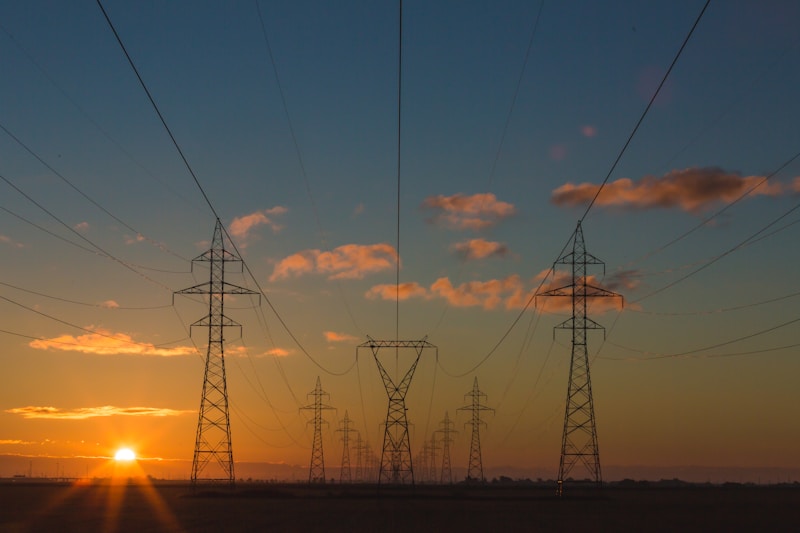
Energy & Utilities
The energy and utilities sector represents one of the world's largest industries, with global electricity markets exceeding $2 trillion annually and serving virtually every human on earth. Electric utilities manage vast, complex grids delivering power from hundreds of generation sources to millions of endpoints, requiring perfect supply-demand balance every millisecond—excess generation causes frequency spikes damaging equipment, while insufficient supply triggers brownouts or blackouts. The industry faces transformational pressures: renewable energy mandates requiring integration of variable solar and wind power incompatible with traditional baseload planning; aging infrastructure with transformers and transmission lines installed 50+ years ago approaching end of life; climate change increasing extreme weather events causing outages; and customer expectations for 100% reliability despite rising costs. Utilities must simultaneously improve reliability, reduce costs, integrate renewables, and maintain affordable rates for residential customers while competing with distributed generation (rooftop solar) threatening traditional utility business models.
Utility business models traditionally centered on regulated monopolies earning returns on infrastructure investments, generating revenue from kilowatt-hour sales and monthly service charges while operating under strict rate regulation preventing excessive profits. This model works well for capital-intensive baseload generation (coal, nuclear, gas plants) with steady output, but renewable energy fundamentally disrupts the economics: solar and wind have near-zero marginal costs once installed but produce power intermittently regardless of demand, creating "duck curve" challenges where utilities must maintain expensive backup generation for evening peaks despite daytime solar abundance. Distributed energy resources (rooftop solar, batteries, electric vehicles) enable customers to generate and store their own power, reducing utility sales while the grid still requires maintenance. Forward-thinking utilities evolve toward platform business models: managing energy networks connecting diverse resources, offering grid services like demand response and virtual power plants, and monetizing data and analytics. Success requires operational efficiency reducing costs per customer, grid modernization enabling renewable integration and distributed resource coordination, and customer engagement programs building loyalty despite competition from independent solar installers.
Energy grid technology infrastructure spans generation management systems controlling power plants; SCADA (Supervisory Control and Data Acquisition) monitoring grid conditions and controlling switches and breakers; energy management systems optimizing generation dispatch; outage management systems tracking and coordinating restoration; customer information systems handling billing and service requests; advanced metering infrastructure (smart meters) providing granular consumption data; distribution automation equipment enabling remote fault isolation; and grid analytics platforms processing operational data. Modern smart grids deploy extensive sensor networks measuring voltage, current, power quality, and equipment health at thousands of points. Weather forecasting systems predict renewable generation. Demand response platforms coordinate large customers reducing consumption during peak periods. Battery storage systems provide grid services but require sophisticated control algorithms balancing multiple objectives. SCADA systems enable remote monitoring and control but decisions remain predominantly manual: grid operators watch dashboards and adjust dispatch based on experience and forecasts. Renewable integration exists but often requires curtailing solar/wind output during low-demand periods, wasting clean energy because storage and demand flexibility are insufficiently coordinated.
Agentic AI enables truly intelligent grids where autonomous agents manage operations with superhuman capability. Renewable forecasting agents predict solar and wind output hours ahead with 95% accuracy using deep learning models analyzing weather patterns, historical generation, satellite imagery, and atmospheric conditions, enabling proactive grid balancing. Battery optimization agents orchestrate storage across the network, charging when renewable generation exceeds demand and electricity prices are low, discharging during peak demand when prices spike—continuously optimizing economic value while providing grid stability services. Load balancing agents monitor demand across all circuits in real-time, automatically dispatching generation from optimal sources (lowest cost, cleanest emissions, fastest response) while maintaining frequency and voltage within specifications. Predictive maintenance agents analyze thermal imaging, vibration patterns, partial discharge signals, and performance trends from transformers and transmission equipment to identify failures 2-4 weeks early, scheduling service before outages. Distributed resource orchestration agents coordinate millions of smart thermostats, EV chargers, water heaters, and batteries to function as virtual power plants—reducing peak demand, providing frequency regulation services, and enabling renewable integration at scale previously impossible. Customer service AI handles outages, billing inquiries, and energy efficiency recommendations 24/7. The transformation: 20% energy waste reduction, 40% fewer outages, 30% operational cost savings, 50% renewable penetration without reliability sacrifice, making clean energy both sustainable and dependable.
Real-time Agentic AI impact
Live performance metrics showing how Agentic AI continuously optimizes operations and delivers measurable results across your organization.
- Traditional
- Agentic AI
Energy challenges solved
How Agentic Ai transforms energy and utility operations
Energy waste, peak demand spikes, inefficient load balancing costing billions
AI optimizes grid operations in real-time, balances demand, and reduces energy waste by 20%
Billions of data points from smart meters, sensors—overwhelming to analyze
Agentic AI processes all meter data, detects anomalies, predicts demand, and enables dynamic pricing
Equipment failures causing outages, manual inspections, costly emergency repairs
Predictive AI monitors grid health 24/7, prevents failures, reducing outages by 40% and maintenance costs by 30%
Solar/wind variability causing grid instability, difficult to balance with traditional sources
AI forecasts renewable output, orchestrates storage, and seamlessly integrates clean energy sources
Complete grid automation
Agentic Ai managing every aspect of energy operations
- Real-time load balancing and optimization
- Predictive demand forecasting
- Automated fault detection and isolation
- Dynamic voltage and frequency control
- Predictive maintenance for transformers and equipment
- Automated inspection scheduling
- Equipment health monitoring via IoT
- Outage prediction and prevention
- Automated meter reading and billing
- Dynamic pricing based on demand patterns
- 24/7 Agentic Ai customer service assistant
- Energy usage insights and recommendations
- Solar and wind output forecasting
- Battery storage optimization
- Grid stability management with renewables
- Carbon footprint tracking and reporting
AI Agents for Grid Operations and Utility Management
1C Platform deploys AI agents that optimize grid performance, predict outages, and automate customer service for energy and utility companies. Agents integrate with SCADA, IoT sensors, and billing systems — preventing 90% of outages while improving efficiency 25%.
Grid Optimization
Agents monitor grid load, voltage, and frequency in real time to optimize power distribution. They balance supply and demand, integrate renewable sources, and prevent overloading — improving grid efficiency by 25% while maintaining stability.
Key Use Cases
- Optimize load balancing in real time
- Integrate renewable energy sources
- Prevent grid overloading automatically
Outage Prediction & Response
Agents analyze weather data, equipment sensors, and historical patterns to predict outages before they occur. They dispatch crews, route power, and communicate with customers — reducing outage duration by 60% and preventing 90% of preventable outages.
Key Use Cases
- Predict outages from weather and sensor data
- Dispatch crews automatically
- Communicate outage status to customers
Customer Billing & Service
Agents automate billing, payment processing, and customer inquiries. They detect billing anomalies, process payment arrangements, and answer usage questions — reducing call center volume by 50% while improving customer satisfaction.
Key Use Cases
- Automate billing and payment processing
- Detect billing anomalies automatically
- Answer customer usage questions 24/7
Demand Forecasting
Agents forecast energy demand using ML models trained on weather, usage patterns, and grid data. They recommend generation adjustments, optimize storage dispatch, and support capacity planning — ensuring reliable supply at lowest cost.
Key Use Cases
- Forecast demand with ML precision
- Optimize generation and storage dispatch
- Support capacity planning decisions
Renewable Integration
Agents manage the integration of solar, wind, and storage into the grid. They predict renewable generation, balance intermittency with storage, and ensure stable power supply — accelerating the transition to clean energy without reliability risk.
Key Use Cases
- Predict renewable generation output
- Balance intermittency with battery storage
- Ensure stable supply with renewables
Asset Management
Agents track the health of transformers, lines, and substations via IoT sensors. They predict equipment failures, schedule maintenance, and extend asset life — reducing capital expenditures and preventing costly infrastructure failures.
Key Use Cases
- Predict asset failures from sensor data
- Schedule maintenance to extend asset life
- Reduce capital expenditures proactively
Each capability is production-ready, enterprise-tested, and integrates seamlessly with your existing toolchain. Deploy individual features or the full suite — your AI transformation scales with your needs.
Frequently Asked Questions
Explore Related Solutions
Explore related topics and resources on the 1C Platform.
Property Management AI
AI solutions for property management, tenant services, and real estate operations.
Data Center AI
AI-powered data center management, monitoring, and optimization.
Financial Institutions AI
AI for banking, lending, fraud detection, and financial compliance.
Corporate Campus AI
AI for facility management, employee services, and corporate operations.
Agentic AI Platform
Deploy autonomous AI agents that handle complex multi-step workflows. Multi-agent orchestration, no-code development, and enterprise integration.
Enterprise Suite - AI-Powered ERP & CRM
Unified enterprise operating system with ERP, CRM, financial management, HR/payroll, supply chain, and business intelligence.
Cloud Platform
Scalable cloud infrastructure for enterprise AI deployment. Multi-region, auto-scaling, and enterprise-grade security.
Developer Tools & SDK
Build custom AI agents with our comprehensive SDK, CLI tools, and developer APIs. Full documentation and code examples.